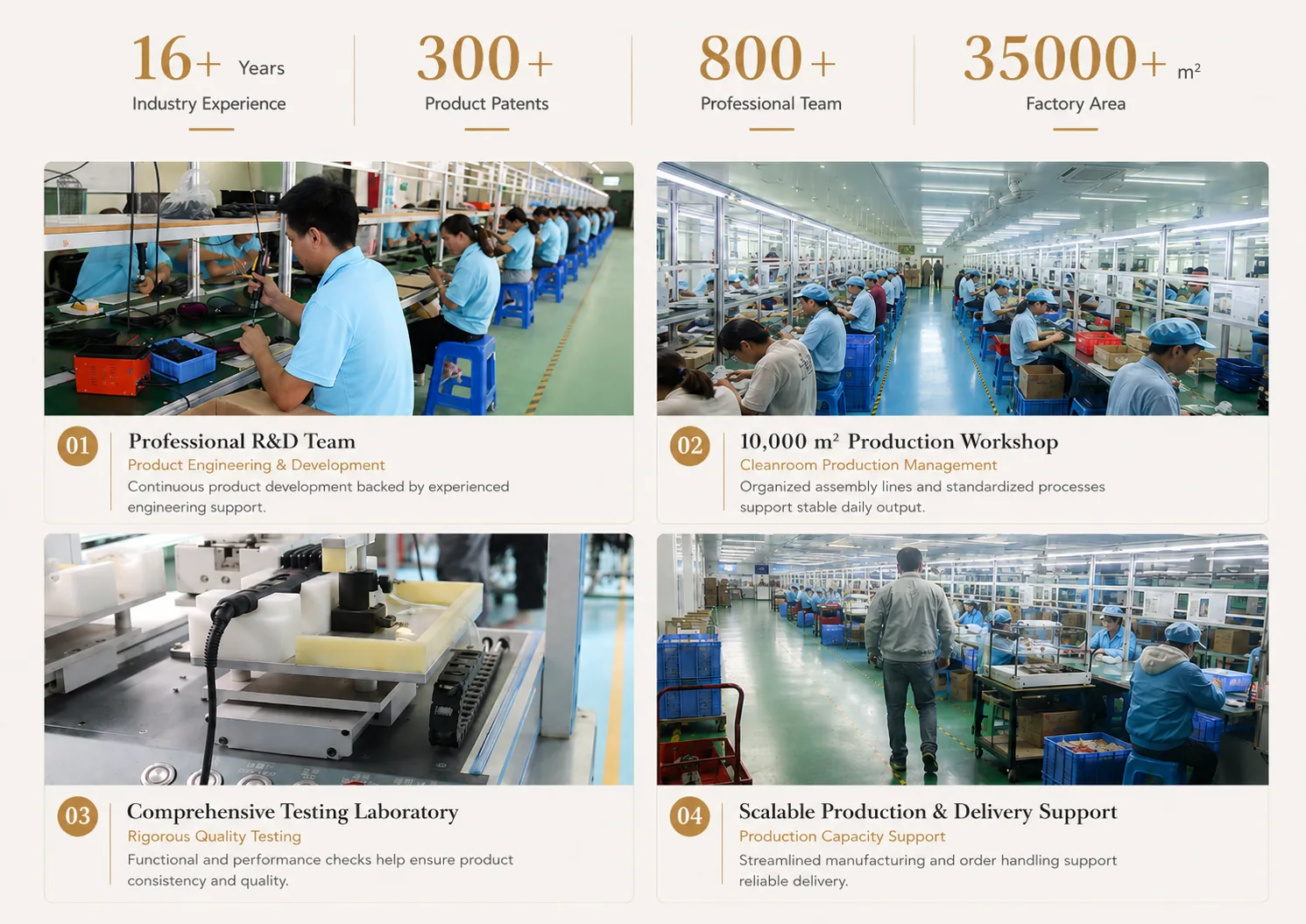
1. Verify real product capability first
Ask which hair straightener brush platforms the factory regularly handles and request clear model specifications, product photos and physical samples. A hair straightener brush factory China page should be supported by actual product and production evidence, not only marketing copy.
Check whether the factory can explain differences among corded, cordless, ceramic, ionic, infrared and other platforms it offers.
2. Review the manufacturing steps that affect your model
For an electrical styling tool, important areas can include plastic parts, surface finishing, electronics or control assembly, heater installation, final assembly and packaging. The exact process depends on the selected model.
Ask which operations are performed in-house and which are supported by outside partners or component suppliers when that distinction matters to your quality plan.
3. Ask how incoming materials and components are checked
Product consistency starts before final assembly. Ask how the factory handles incoming components, appearance standards and any critical parts related to heater, electronics, battery, cord or plug.
For custom colors or branded parts, confirm how approved appearance references are communicated to production.
4. Connect quality checks to the approved sample
A useful quality-control plan should compare production against the approved sample and written specification. Ask how heating/function checks, controls, appearance, accessories, labels and packaging are inspected.
For cordless models, battery and charging behavior should be evaluated on the exact platform; for corded models, plug and cord configuration should match the approved market version.
5. Review aging or reliability testing where applicable
Ask what reliability or aging tests the factory normally performs for the selected model and how results are recorded. Do not assume a factory-wide statement automatically proves the requirement for every SKU.
If your brand has additional test requirements, discuss them before sample approval so the supplier can confirm feasibility, cost and timing impact.
6. Check packaging and label control
Private label quality includes retail presentation. Verify how product labels, barcode, manuals, inserts, color boxes and shipping-carton marks are checked against approved artwork.
A packaging error can create a market problem even when the electrical product itself works correctly, so packaging should be part of the approval and inspection plan.
7. Review documentation by exact model and market
Ask which certificates, test reports, declarations or other documents are available for the selected model and configuration. The buyer/importer should review applicability for its own destination market.
Avoid supplier comparisons based only on broad phrases such as “CE certified” or “UKCA available” without checking the model scope and supporting file.
8. Evaluate change control and communication
A strong factory should be able to record changes after sampling and confirm whether a revision affects price, MOQ, tooling, testing, documentation or production planning.
Before bulk production, both sides should have a final approved specification that identifies the model, appearance, branding, market configuration and packaging.
Frequently Asked Questions
What is the best proof that a hair styling tools factory can handle my order?
A physical sample and a clear explanation of how the exact model is assembled, tested, inspected, packaged and documented provide stronger evidence than generic factory photos alone.
Should I choose a factory only by price?
No. Compare model fit, sample quality, customization scope, QC, packaging control, model-specific documents, communication and quote assumptions together with price.
What should I verify during sample approval?
Verify the exact model, controls, heating behavior, appearance, logo/color, plug or charging configuration, packaging direction and any requirements that will be used as the bulk-production reference.
Who should verify compliance for the destination market?
The supplier can provide model-specific information and available documents, while the brand or importer should verify which legal and compliance obligations apply in its target market.
Continue your sourcing review
Use these related pages to move from research to a clearer RFQ, sample and supplier decision.