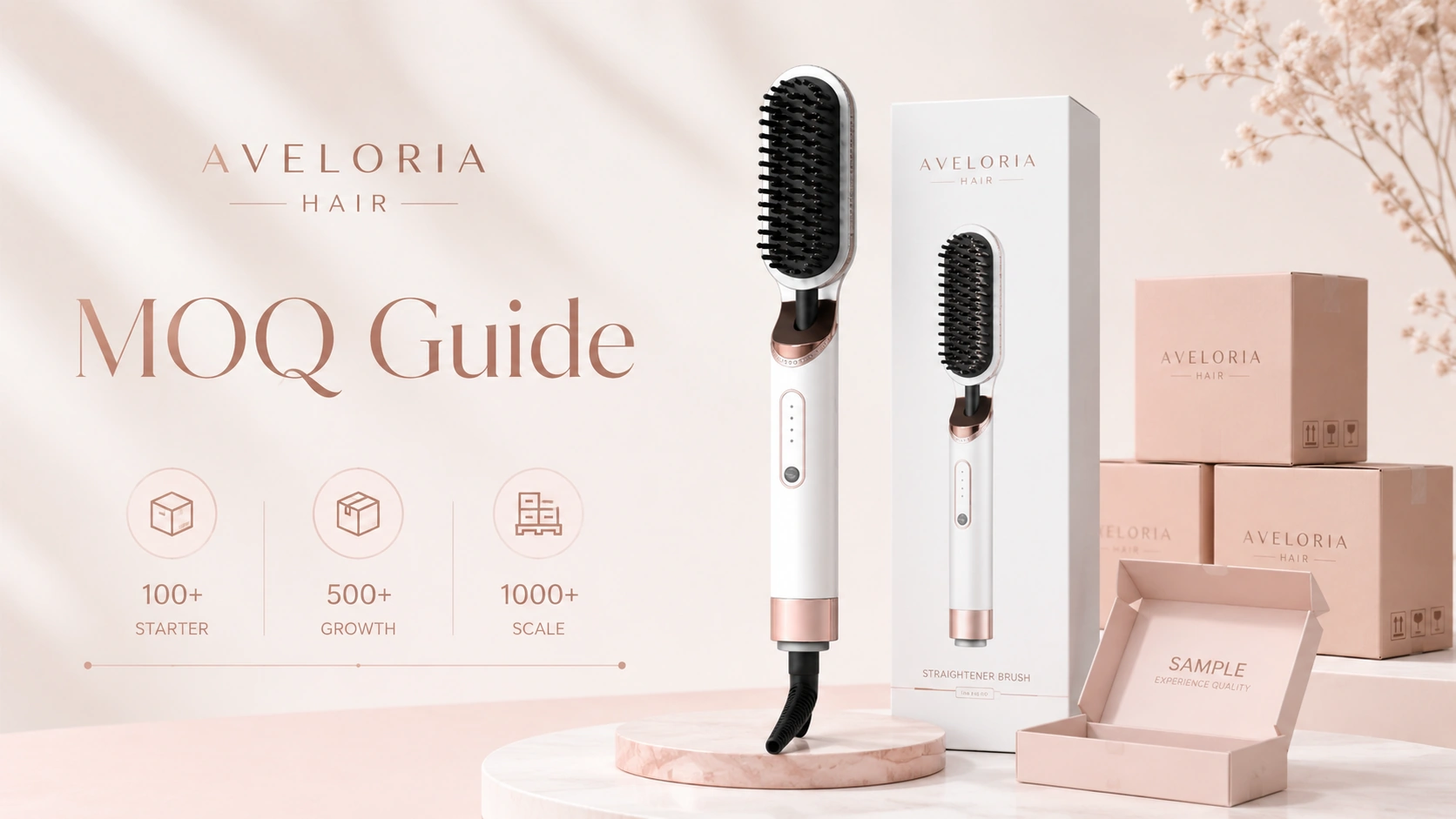
1. Standard product MOQ
A standard model with existing materials and a standard finish generally involves the simplest production arrangement. Buyers should select a product platform that meets their market needs before comparing quantity requirements.
Ask whether the quoted MOQ covers an unbranded product, a standard package, or a Private label configuration.
2. Logo and color customization
Adding a logo or custom product color may introduce setup, printing, surface treatment or material planning requirements. The MOQ for a branded model may therefore differ from the quantity for a sample or standard configuration.
Confirm the available logo method, placement, color matching approach and approval process before finalizing artwork.
3. Custom packaging MOQ
Private Label Packaging can affect order thresholds because color boxes, insert trays, manuals and labels require artwork confirmation and packaging production.
Prepare target country or region information, language requirements, barcode details and retail channel expectations before requesting a packaging quotation.
4. Samples before volume production
Samples help buyers evaluate product finish, user experience and packaging direction before committing to mass production. Sample charges and lead times are separate from production MOQ and should be discussed clearly.
Record any approved revisions to color, logo position, packaging copy or functional requirements so production follows a confirmed reference.
Information to provide for an accurate MOQ quote
Provide the product type, target country, expected quantity, logo requirements, packaging needs and desired delivery schedule. This helps a supplier give a project-specific answer rather than an unrealistic generic number.
For a broader cost breakdown, review what affects the total cost of a private label hair tool order.
2026 Keyword & Buyer Intent Update
What is the MOQ for private label hair straightener brushes?
For this factory, private label discussions start from 1,000 pieces per model. The final MOQ can depend on the selected product platform, logo process, custom Pantone color, packaging, plug or charging configuration and any non-standard changes. Buyers should request MOQ against one clearly defined specification instead of comparing quantity numbers that refer to different product or packaging setups.
For a hair straightener brush bulk order, separate the product MOQ from packaging or component thresholds. A private label hair straightener brush MOQ may remain straightforward when an existing platform and standard color are used, while custom color, printed packaging or deeper OEM changes can introduce additional preparation requirements.
Primary search intent: what is the MOQ for private label hair straightener brushes. Related buyer searches: hair straightener brush manufacturer MOQ, private label hair straightener brush MOQ, hair straightener brush bulk order.
Buyer FAQ
Is the MOQ the same for every straightener brush model?
No. MOQ can vary with the selected model and customization scope. This factory starts private label discussions from 1,000 pieces per model, but the final project requirement should be confirmed against the exact specification.
Can packaging have a different MOQ from the product?
Yes. Printed boxes, inserts, manuals or labels can have their own production constraints, so buyers should confirm product and packaging requirements together.
Continue your sourcing review
Continue your sourcing review
Use these related pages to compare models, assess samples and prepare a more complete supplier inquiry.