
Start With a Market-Specific Product Brief
The first step in learning how to import hair straightener brushes from China is to define exactly what the product must do for your market. A distributor selling to salons may prioritize durability and a wide temperature range. An online beauty brand may prioritize anti-scald design, compact packaging and a strong before-and-after story. A travel collection may need a smaller format or rechargeable concept, while a UK project must confirm the intended plug, voltage, labeling and documentation before production.
Your brief should include the product format, target hair types, preferred temperature range, heating technology, corded or rechargeable structure, target country, expected order quantity, branding method, packaging level and launch date. This information helps a hair straightener brush supplier in China recommend models that are commercially relevant instead of sending a random catalogue.
Step 1: Shortlist Suppliers by Capability, Not Only by Price
A low quotation is not useful if the supplier cannot support the selected model, destination configuration or packaging process. Ask each potential supplier to explain:
- Which models are already in stable production.
- Whether the supplier manufactures, assembles or trades the product.
- Which heating, temperature and safety checks are performed.
- Whether logo, color, manual, label and retail packaging can be coordinated.
- Which documents are available for the exact model and configuration.
- Who manages sample feedback, pre-production approval and final inspection.
Verify the company name on quotations, invoices and business documents. Ask for product-specific factory or process information rather than relying only on a general showroom video. A credible supplier should be able to discuss the product structure, known limitations, MOQ and approval process without avoiding detailed questions.
Step 2: Request Quotations That Use the Same Assumptions
| Quotation Item | What the Buyer Should Specify |
|---|---|
| Product | Exact model, temperature version, plug or charging configuration and included accessories. |
| Quantity | Required units per model and per color, plus acceptable quantity tolerance. |
| Branding | Logo method, position, number of colors and artwork format. |
| Packaging | Standard box or custom color box, manual languages, labels, barcode and carton marks. |
| Trade term | EXW, FOB, CIF, DAP or DDP destination, with a written list of what is included. |
| Timing | Sample time, artwork approval time, production lead time and shipping estimate. |
Without identical assumptions, two prices cannot be compared fairly. One quotation may exclude the plug, packaging insert, instruction manual or export handling, while another includes them. Ask for a line-by-line cost summary when customization is significant.
Step 3: Evaluate a Real Product Sample
Photos and specifications help with initial selection, but a physical sample is necessary to judge actual user experience. Test heat-up time, temperature stability, button response, shell temperature, anti-scald comfort, brush glide, snagging, root access, cord handling and the final styling result.
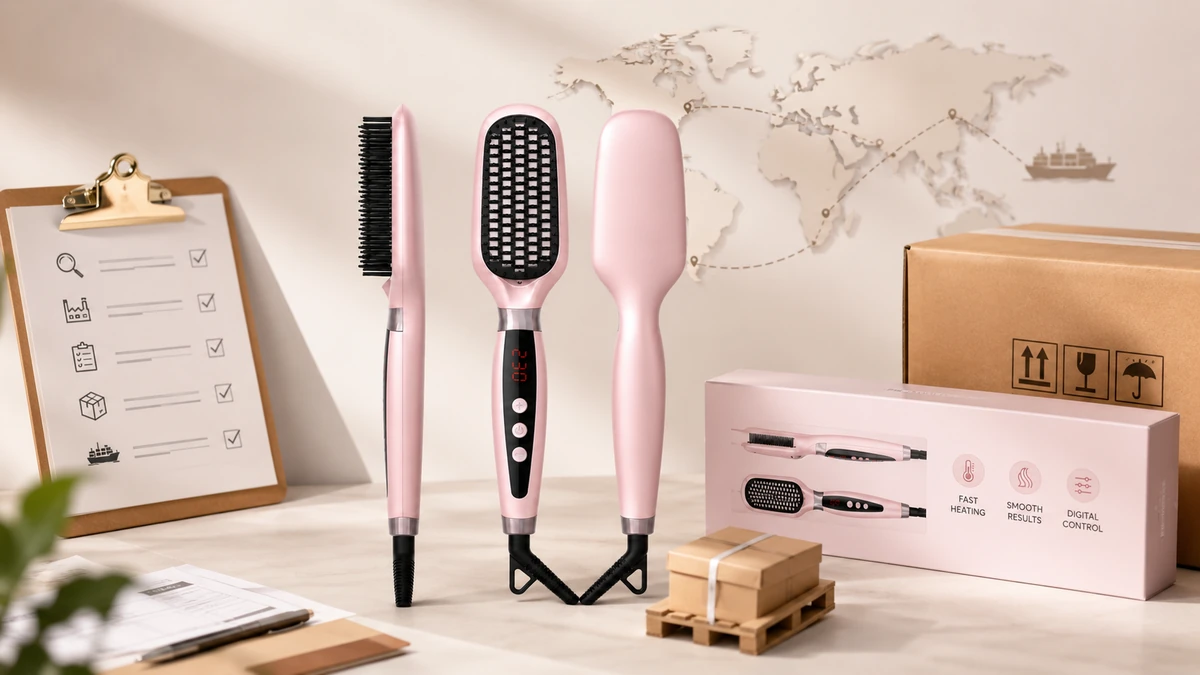
For the visual example in this guide, the S153 Ionic Hair Straightener Brush represents a full-size brush format that a buyer can evaluate for appearance, controls, bristle structure and private label presentation. It is an example only; final project specifications should always be confirmed against the selected sample.
Record each result as approved, revise or reject. Photos and videos should identify the exact sample version, especially when more than one supplier or configuration is under review.
Step 4: Confirm Plug, Voltage, Labels and Compliance Planning
Electrical hair tools must be prepared for the destination market, not simply fitted with a different plug at the last minute. Confirm the rated voltage and frequency, plug type, cord specification, product label, warnings, manual language and the documents that apply to the exact model.
For UK projects, verify current product-marking and electrical-equipment requirements using official GOV.UK guidance. For EU projects, check the applicable EU legislation, CE conformity process, RoHS obligations and import requirements. Product classification and duty rates should be checked through the official tariff system or with a customs broker.
Step 5: Approve the Pre-Production Configuration
The ordinary functional sample is not always the final production reference. Before mass production, approve the complete configuration:
- Product model and internal specification.
- Final color and surface finish.
- Logo size, position and process.
- Plug, cable or charging accessory.
- Rating label and warning information.
- User manual language and content.
- Retail box, insert, barcode and carton marks.
- Approved sample or signed reference photos.
Any change after approval should be documented. A small change to the plug, heater, board, battery, label or packaging may affect cost, lead time, testing or documentation.
Step 6: Set Production and Inspection Checkpoints
A purchase order should define more than quantity and price. Include the approved specification, packaging files, inspection criteria, acceptable quantity tolerance, shipment term and required documents.
For a first order, useful checkpoints include material confirmation, logo or color approval, packaging proof, pre-production sample approval, in-process update and pre-shipment inspection. The final inspection should compare the goods with the approved reference, not with a generic product description.
| Inspection Area | Examples |
|---|---|
| Quantity and assortment | Model, color, plug version, accessories and carton quantity. |
| Appearance | Surface defects, seams, logo, buttons, labels and packaging print. |
| Function | Power-on, temperature settings, heat-up, display, auto shut-off and controls. |
| Safety-related review | Shell heat, cord strain relief, plug fit, charging behavior and visible workmanship. |
| Packaging | Manual, labels, barcode, inserts, carton marks and drop-protection arrangement. |
Step 7: Prepare Shipping and Customs Documents
Confirm who is responsible for the commercial invoice, packing list, export declaration, transport document, certificate of origin when required, insurance and destination clearance. The importer should verify the commodity code and duty treatment independently.
Trade terms must be understood in practical language. Under EXW, the buyer usually takes responsibility early in the process. Under FOB, the supplier normally manages delivery to the agreed port and export formalities. DAP and DDP include more destination services, but the exact scope must be written clearly. Never assume that “shipping included” also means duties, import VAT, customs brokerage and local surcharges are included.
Step 8: Check the Shipment After Arrival
When the goods reach the warehouse, compare the received cartons with the packing list and inspection record. Retain samples from different cartons, check visible transport damage and test a defined number of units before releasing inventory for sale.
Document any discrepancy immediately. Clear photos, carton numbers, quantities and test results help the supplier investigate whether the issue occurred during production, packing or transport.
Common Import Mistakes to Avoid
- Choosing a model before defining the destination market.
- Comparing quotations with different packaging or trade-term assumptions.
- Approving a product from photos instead of testing a sample.
- Using a compliance document that does not match the exact model.
- Changing artwork, plug or accessories after production has started.
- Skipping pre-shipment inspection on the first order.
- Calculating profit from the factory price instead of landed cost.
Buyer Import Checklist
- Final product and market brief completed.
- Supplier identity and manufacturing capability reviewed.
- Comparable quotation received.
- Functional sample tested.
- Pre-production configuration approved.
- Applicable documents checked for the exact model.
- Inspection criteria agreed.
- Shipping term and customs responsibilities confirmed.
- Landed-cost calculation completed before deposit.
Need a Model Recommendation for Your Import Project?
Share your destination market, target quantity, product positioning, plug or charging requirement and packaging plan. Aveloria Hair can recommend suitable existing models and confirm the information needed for sample review.
Frequently Asked Questions
What information should I send when requesting a hair straightener brush quotation?
Send the target market, estimated quantity, preferred product type, plug or charging configuration, logo method, packaging requirement and expected launch date.
Should I approve a sample before placing a bulk order?
Yes. The sample should be tested for heating, glide, anti-scald comfort, controls, cord or charging configuration and the intended styling result before bulk approval.
Which shipping term is best for a first order?
There is no single best term. Compare what is included under EXW, FOB, CIF, DAP or DDP and confirm who controls export handling, freight, customs clearance, duties and local delivery.
How do I check import duty for my market?
Use the official tariff tool for the destination country and verify the commodity classification with a qualified customs broker before shipment.
Which model is featured in this guide?
This guide features the S153 Ionic Hair Straightener Brush as a visual example. Final specifications must be confirmed for the selected model.
Continue your sourcing review
Use these related pages to compare models, assess samples and prepare a more complete supplier inquiry.
2026 Keyword & Buyer Intent Update
How do you import hair straightener brushes from China for a private label or wholesale order?
Define the product and destination market first, then shortlist suppliers, compare the same RFQ, order and evaluate samples, confirm customization and packaging, verify model-specific documents, freeze the specification, agree inspection requirements and plan freight, customs and local compliance with qualified service providers. Import cost and timing cannot be compared accurately until the product configuration and shipping terms are clear.
When comparing a bulk hair straightener brush supplier or factory direct hair straightener brush wholesale offer, confirm whether the quote covers the same product, logo, packaging, plug or charging arrangement and trade term. A low unit price can be misleading if packaging, testing, inspection, freight, duty or local delivery are excluded.
Primary search intent: how to import hair straightener brushes from China. Related buyer searches: hair straightener brush supplier China, hair straightener brush bulk order, bulk hair straightener brush supplier, factory direct hair straightener brush wholesale.
Buyer FAQ
Should buyers choose a China supplier only by unit price?
No. Compare the complete project: model, specification, sample quality, customization, packaging, document scope, inspection, trade terms and landed-cost inputs.
When should freight be quoted?
Freight estimates become more useful after product quantity, packaging dimensions, gross weight, destination and trade term are sufficiently defined.