1. Send a supplier-ready project brief
Start with the target country, expected order quantity, preferred product type, corded or cordless direction, heating/feature preferences, logo, color, packaging and any required changes. If you already have a benchmark product, explain what you want to keep and what you want to change.
A clear brief helps a hair straightener brush sample manufacturer distinguish a standard sample from a custom development sample.
2. Choose the closest base model before customizing
For most private label projects, the fastest path is to shortlist an existing product platform first. Compare product size, brush shape, heater, temperature settings, ionic/infrared functions, charging or cord structure and target retail positioning.
Do not approve customization on a model that has not been evaluated for the target use case.
3. Confirm what the sample should include
Define whether the first sample is a standard product sample, a logo sample, a custom-color sample or a more complete branded sample. Packaging may be reviewed separately through digital artwork, printed proofs or a packaging sample depending on the project stage.
Write down what is included so both sides use the same definition of “sample.”
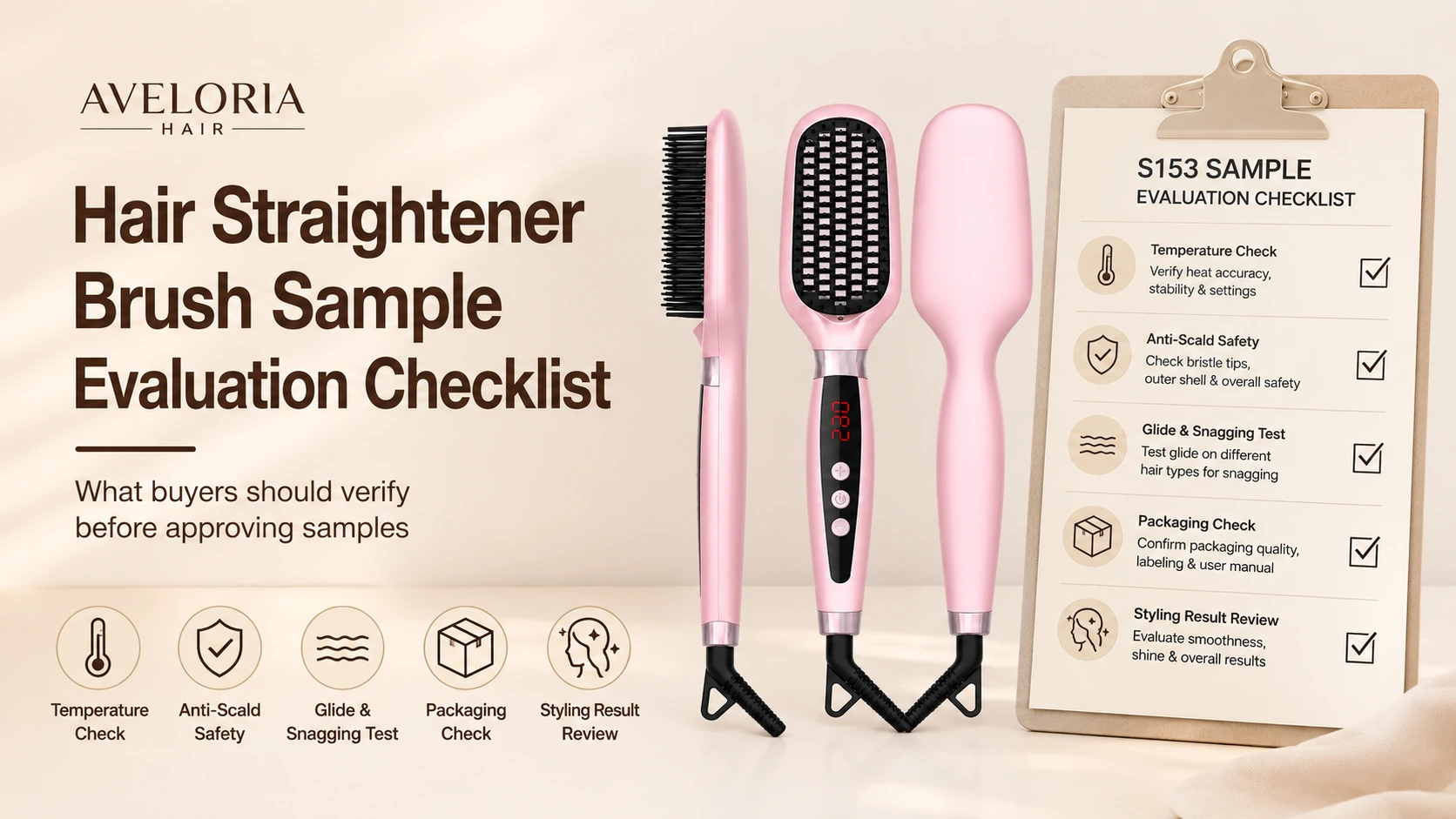
4. Test product performance and safety-related user experience
Evaluate heat-up behavior, temperature settings, controls, comb/tooth structure, anti-scald comfort, glide, snagging, cord or charging behavior and automatic shut-off if the selected model includes it.
Use the exact sample you plan to approve rather than relying only on catalog specifications.
5. Review logo, color, plug and packaging direction
Check logo position and size, Pantone color reference, plug or charging configuration, label locations, barcode, manual language and packaging copy. Claims printed on packaging should match the final product configuration.
For UK, EU, US or other market projects, review model-specific documents before final packaging artwork is locked.
6. Record revisions instead of approving changes in chat only
Create a simple revision list with photos, marked-up artwork or specification notes. Separate cosmetic changes from functional changes because they can affect cost, sample status, testing and production planning differently.
If a change affects heater, controls, battery, electronics or structure, ask the supplier whether another sample or pre-production sample is needed.
7. Freeze the approved reference before bulk production
The final approval should identify the exact model, appearance, color, logo, plug/charging setup, packaging, labels, manual and any model-specific documents reviewed by the buyer.
This approved reference becomes the basis for mass-production inspection and reduces disputes caused by unclear verbal instructions.
Frequently Asked Questions
What should a private label sample include?
It depends on the project stage. The buyer should define whether the sample is for product evaluation only or must also include logo, custom color, market configuration and packaging elements.
Should a buyer test a sample before approving packaging?
Yes. Product claims, plug/voltage information and other printed details should match the final approved product configuration.
When is another sample needed after revisions?
Another sample may be appropriate when a change affects product structure, heater, controls, battery, electronics, market configuration or any item the buyer needs to physically re-approve.
What is the MOQ after sample approval?
MOQ starts from 1,000 pieces per model on this site, subject to the selected platform and customization scope.
Continue your sourcing review
Use these related pages to move from research to a clearer RFQ, sample and supplier decision.