1. Start with the buyer promise
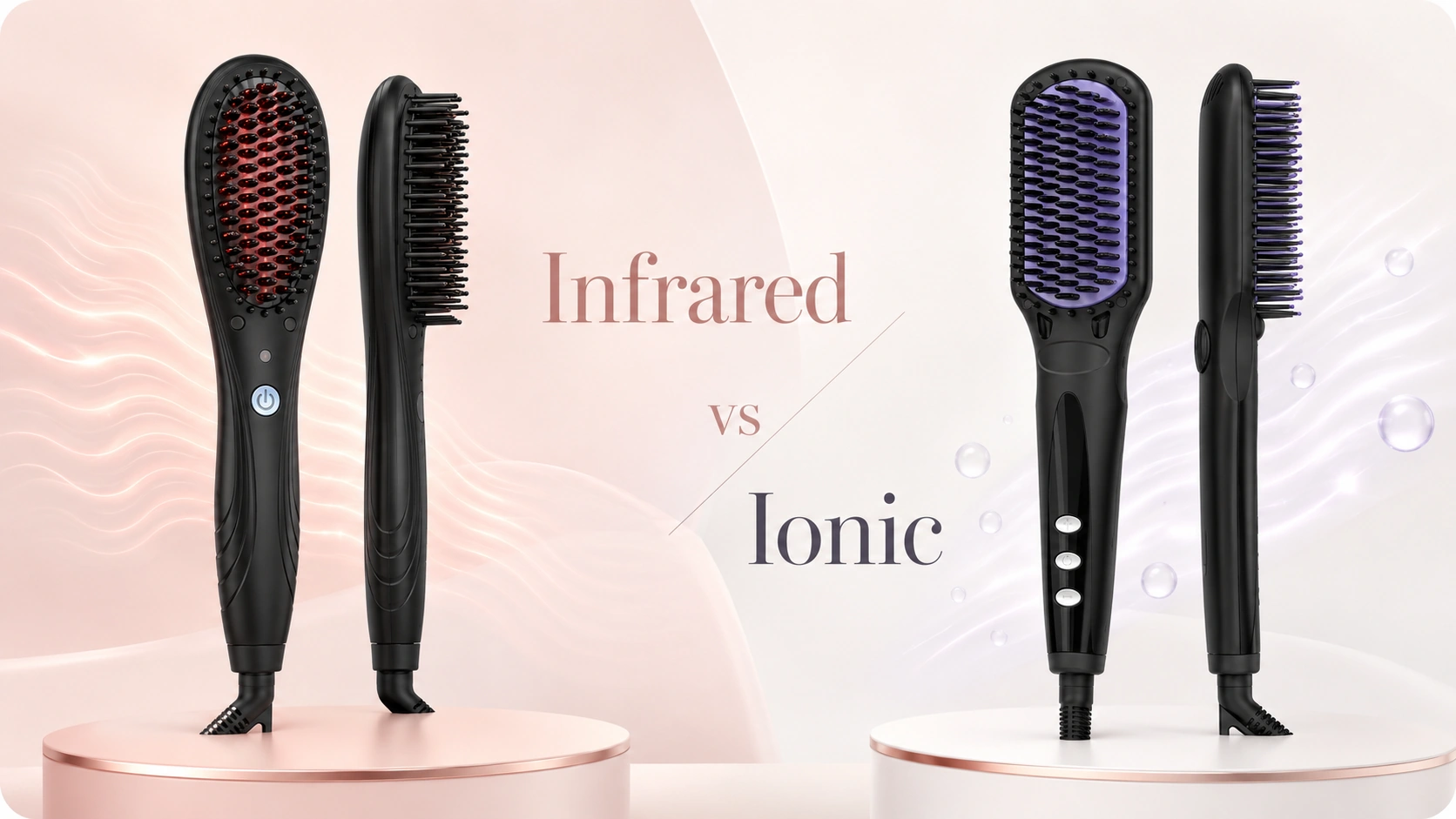
Ionic straightener brushes are usually positioned around smoother-looking hair and frizz-control messaging, while infrared versions are often positioned as upgraded or premium styling tools. Ceramic-related claims often support stable heat transfer and surface comfort.
Before choosing a model, define whether your customer expects a daily styling tool, a premium beauty device, a travel option or a salon-adjacent retail product.
2. Compare the heating system and temperature range
Review the heating system, temperature range and display method for each model. For B2B sourcing, a model that looks attractive but lacks a clear specification sheet is harder to launch under a private label program.
Ask for rated voltage, power, temperature settings, heating plate size and material so your sales team can explain the product consistently.
3. Evaluate how the feature appears in Private Label Packaging
A feature only helps sales when it can be translated into packaging copy, product listings and customer education. Ionic, infrared and ceramic points should be explained in simple language without making unsupported claims.
For new brands, a balanced feature set with clear user benefits is usually more useful than too many technical terms.
4. Match the model to channel and price point
Wholesale buyers, Amazon sellers, salon brands and beauty retailers may evaluate the same feature differently. A higher-feature model may support a premium price, while a simpler model can work better for entry-level private label ranges.
Compare the feature with MOQ, packaging cost and certification requirements before finalizing the launch plan. The S102 vs S102R comparison shows how a classic ionic model and an infrared ionic model can support different brand positions.
5. Request samples before final selection
Appearance, handle feel, button logic, heating experience and packaging presentation should be reviewed physically. A sample also helps you prepare photos, instructions and retail copy before confirming bulk orders.
Use sample feedback to decide whether a model should become your hero SKU or part of a wider hair styling tool collection.
Real Model Comparison
Infrared vs ionic: two features, not the same claim.
“Ionic” denotes an ion-generating feature; “infrared” describes an infrared heat feature. A model may contain both. Neither term alone establishes faster styling, less hair damage or guaranteed frizz reduction; evaluate the exact sample before making claims.
What changes between S102 and S102R?
The S102 ionic brush and S102R infrared ionic brush are both listed with MCH heating and an 80–230°C temperature range. Buyers should examine feature configuration, comfort, styling results, available documents and the physical sample—not assume infrared means a higher maximum temperature. See the S102 vs S102R comparison and confirm logo, plug, packaging and MOQ from 1,000 pcs per model.
Buyer FAQ
Can a straightener brush be both infrared and ionic?
Some product platforms may combine multiple features, but buyers should confirm the exact model specification and sample rather than infer functions from a category name.
Does ionic automatically mean anti-frizz performance for every user?
Ionic can be part of an anti-frizz product story, but visible results vary with the full product design, hair type, environment and use. Claims should be based on the exact product and appropriate support.
Continue your sourcing review
Continue your sourcing review
Use these related pages to compare models, assess samples and prepare a more complete supplier inquiry.