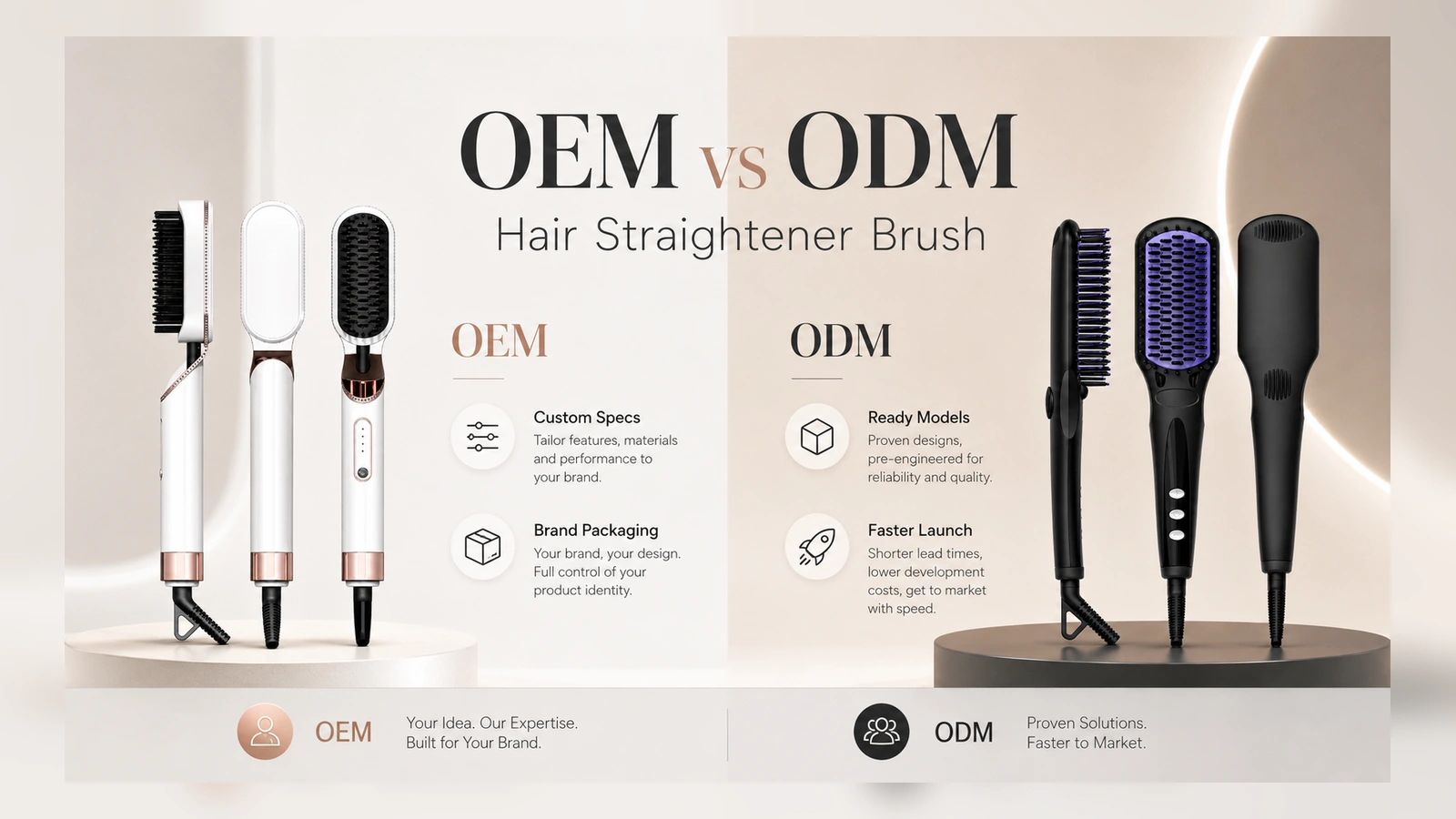
What OEM typically means for a beauty brand
In an OEM-oriented project, the buyer usually begins with a defined product requirement, specification direction or established design intention. The manufacturing partner evaluates feasibility, production method and customization execution.
This path can support stronger product differentiation, but it generally requires clearer technical decisions and greater project coordination.
What ODM typically means
In an ODM-oriented project, a buyer starts from an existing product platform offered by the manufacturer and adapts brand-facing elements such as logo, color, packaging or market-specific configuration where available.
For many first-stage private label launches, this approach can reduce development complexity because the product foundation already exists for evaluation.
How to choose the right path
Choose based on your target launch date, budget, required uniqueness, expected volume and destination market. A retailer testing demand may prefer an existing platform, while an established brand may seek more differentiated development.
Neither approach is automatically better. The right decision aligns investment and product risk with your commercial goal.
Questions to ask before beginning
Ask which models are currently available for review, which features can be changed, whether custom development is possible, which documents apply, and how your requested customization affects MOQ and lead time.
Clear product selection and written specification confirmation reduce mistakes later in packaging, document review and production.
Next step: evaluate a real model
A sourcing decision becomes practical only after evaluating suitable models, documentation and samples. Begin with your target country or region and positioning, then request suitable model recommendations and sample information.
2026 Keyword & Buyer Intent Update
OEM vs ODM hair straightener brush: what is the practical difference for a buyer?
For many buyers, OEM starts from an existing product platform and applies approved branding, color, packaging or market configuration. ODM can involve deeper product development or engineering changes, depending on the factory and project. The important procurement question is not the label itself but which parts of the product can change, what requires engineering or tooling, how samples are approved and how those changes affect MOQ, cost and lead time.
When comparing an OEM hair straightener brush manufacturer, ODM hair straightening brush manufacturer or hair straightener brush OEM factory, send the same change list to each supplier. Ask them to mark every request as standard, customizable, engineering review, tooling required or unavailable. This creates a much clearer comparison than asking only “Do you do OEM/ODM?”
Primary search intent: OEM vs ODM hair straightener brush. Related buyer searches: OEM hair straightener brush manufacturer, ODM hair straightening brush manufacturer, hair straightener brush OEM factory, hair straightening brush OEM supplier, ODM hair straightener brush.
Buyer FAQ
Is private label the same as OEM?
The terms are often used loosely. In practical sourcing, private label commonly means branding an existing platform, while OEM can include a wider range of approved product changes. Define the actual scope instead of relying on terminology.
When does a project become deeper ODM development?
When requested changes go beyond normal branding or configuration and require engineering, structural, electronic, heating, battery or tooling review, the project may require a deeper development path.
Continue your sourcing review
Continue your sourcing review
Use these related pages to compare models, assess samples and prepare a more complete supplier inquiry.