1. Understand the usage scenario
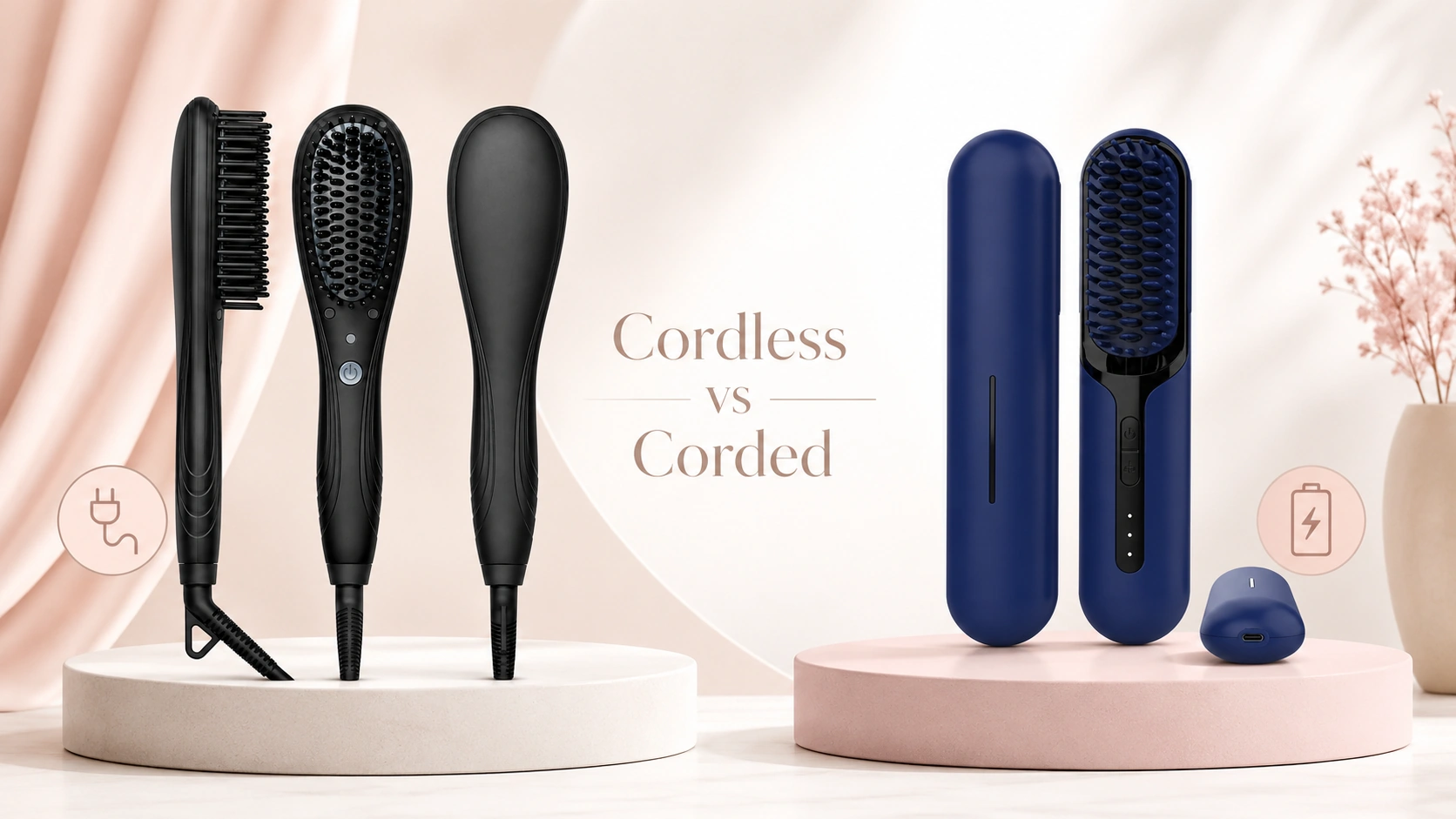
Corded models are often selected for stable home styling, while cordless models are positioned around travel, portability and quick touch-ups. The product story should match how the end user will actually use it.
A cordless product can be attractive, but it also needs clear charging and battery communication.
2. Compare power and temperature performance
Corded models may support stronger continuous performance, while cordless versions need careful review of battery capacity, charging time and heat settings. Ask for actual specifications before choosing.
Heating structure also affects product positioning; compare MCH vs PTC heating for straightener brushes before selecting a model.
For retail listings, explain temperature settings and charging details simply and accurately.
3. Plan packaging and instructions carefully
Cordless products require charging information, cable details and usage reminders. Corded models require plug and voltage details. Both need clear manuals and market-oriented packaging.
Good instructions reduce customer confusion and support better reviews.
4. Match MOQ to product complexity
Rechargeable models can have more components and different sourcing requirements, which may affect MOQ and lead time. Corded models may be easier for first private label launches.
Compare the full project cost, not only the unit price.
5. Use samples to test real positioning
A product that looks good in photos may feel different in hand. Sample review helps you decide whether the model fits your brand quality expectations and customer promise.
Record sample feedback and use it to finalize the first-order SKU plan.
2026 Keyword & Buyer Intent Update
Cordless vs corded hair straightener brush: which is better for a private label brand?
Neither platform is automatically better. Cordless models emphasize portability and travel convenience but add battery, charging and transport considerations. Corded models can simplify continuous-power positioning but require plug and voltage planning. Private label brands should choose the platform around target use case, destination market, packaging and the exact sample performance rather than selecting only from a feature list.
A portable hair straightener brush manufacturer can help buyers compare travel-focused platforms, while a dual voltage straightening brush manufacturer may be relevant for certain corded programs when the exact model supports that configuration. Always confirm voltage, plug or charging details on the selected SKU; do not assume that one specification applies across a full product family.
Primary search intent: cordless vs corded hair straightener brush. Related buyer searches: private label cordless hair straightener brush, portable hair straightener brush manufacturer, travel hair straightener brush manufacturer, dual voltage straightening brush manufacturer.
Buyer FAQ
Is cordless always better for travel beauty brands?
No. Cordless improves portability, but battery capacity, charging, transport and run time also matter. Some brands may prefer a compact corded platform depending on destination market and positioning.
What should be tested before choosing between cordless and corded?
Compare heat-up behavior, usable styling time, temperature controls, handling, plug or charging arrangement, packaging space, user instructions and the target retail story.
Continue your sourcing review
Primary reference sources
Use the official sources below to verify current regulatory or transport requirements. Final obligations depend on the exact product, configuration, destination and role in the supply chain.
Continue your sourcing review
Use these related pages to compare models, assess samples and prepare a more complete supplier inquiry.