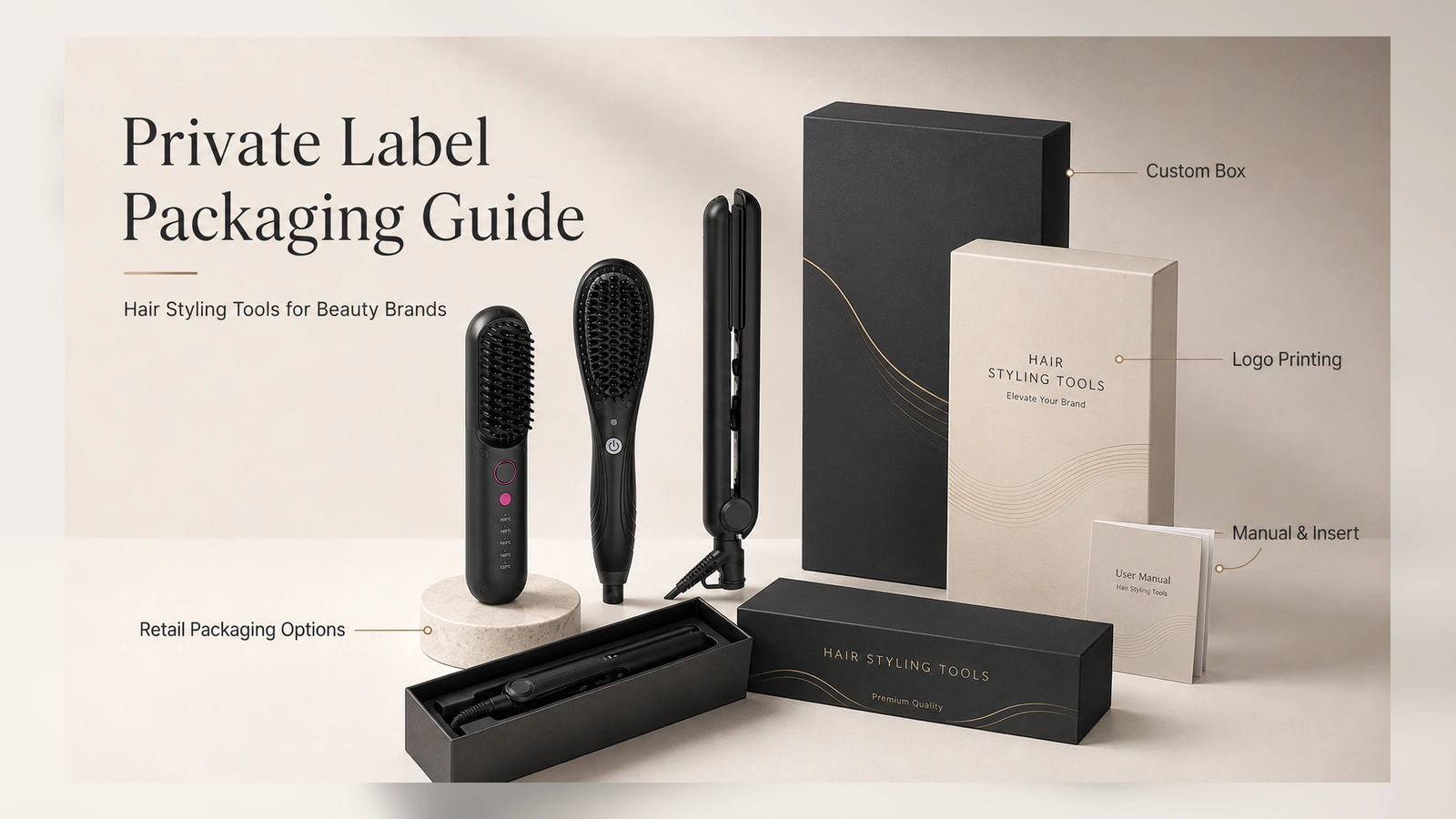
1. Prepare your brand assets
Before asking for packaging pricing, prepare your logo file, brand colors, preferred packaging style and any required retail information. This makes the quotation more accurate.
If you do not have final artwork yet, ask for packaging dimensions and a dieline before designing.
2. Decide what the package must communicate
A hair styling tool package may need feature points, voltage, plug type, temperature range, usage reminders, barcode and model information. Keep the front clean and put technical details in organized areas.
Avoid overloading the box with claims that are not supported by product specifications.
3. Confirm inner tray and protection
The inner structure should protect the product and present it clearly when opened. For electrical tools, cord placement, accessories and manuals should be considered in the package layout.
A good unboxing experience can help retail brands look more professional.
4. Match packaging to MOQ and budget
Custom packaging may increase MOQ, cost and lead time. For first orders, some brands choose standard packaging with stickers or simplified branding before moving to full custom boxes.
Discuss packaging levels with your supplier instead of assuming all customization has the same threshold.
5. Approve samples before mass production
Packaging color, printing position, material feel and product fit should be reviewed before bulk production. Small errors can become expensive after printing.
Keep one approved sample as the reference for future repeat orders.
2026 Keyword & Buyer Intent Update
How do you customize hair straightener brush packaging?
Start with the exact product dimensions and accessory list, then define retail channel, box format, insert, logo, Pantone colors, barcode, labels, manual languages, warnings and destination-market information. Packaging should be approved against the final product configuration; changing the plug, charger, accessories or product dimensions after artwork approval can force packaging revisions.
A custom packaging hair straightener brush project is easier to quote when the buyer separates brand design from required product information. For custom logo and custom color programs, use the same approved brand references across the device, box, manual and labels, while keeping model-specific specifications accurate.
Primary search intent: how to customize hair straightener brush packaging. Related buyer searches: custom packaging hair straightener brush, custom logo hair straightener brush, custom color hair straightener brush, private label hair styling tools manufacturer.
Buyer FAQ
When should packaging artwork start?
Start after the product platform and key configuration are stable enough to define dimensions, accessories, plug or charging setup and required information.
Can the same box artwork be used for multiple markets?
Sometimes a shared design system is possible, but languages, labels, responsible-party information, warnings or other market-specific content may require separate versions. Review each destination market.
Continue your sourcing review
Continue your sourcing review
Use these related pages to compare models, assess samples and prepare a more complete supplier inquiry.