The Direct Answer: Usually Yes, but the Real User Experience Depends on the Design
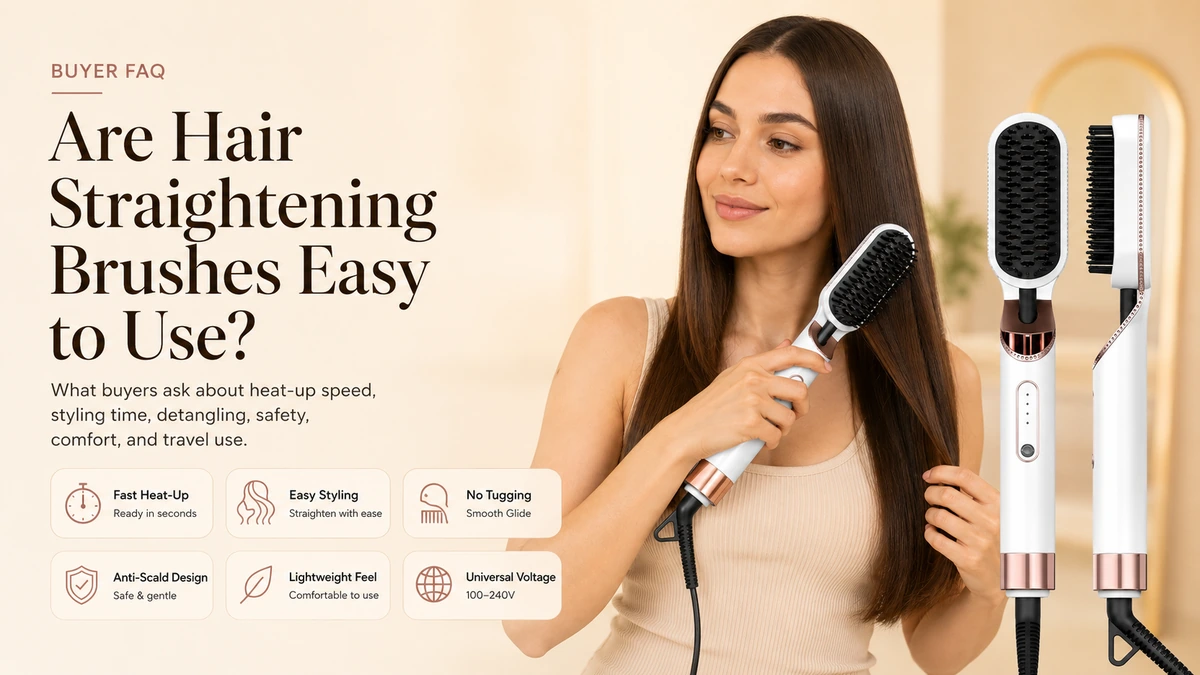
One of the most common questions from beauty brands, sourcing teams, distributors and end users is: are hair straightening brushes easy to use? In most cases, the answer is yes. A straightening brush combines familiar brushing motion with heated styling, so the learning curve is often lower than with a dryer-and-brush routine.
That said, buyers do not only care about the final result. They also want to know whether the brush heats up quickly, whether a full head takes five minutes or twenty minutes, whether it snags or pulls, whether it feels safe near the scalp and ears, whether it becomes tiring to hold, and whether it is practical for travel or international sales. Those questions shape how customers judge a model after the first use.
For B2B buyers, these are also the questions that affect return rates, reviews and repeat purchase behavior. A strong product page should therefore speak not only about temperature and coating, but also about real-world hair straightening brush user experience.
How Fast Does a Hair Straightening Brush Heat Up?
How fast does a hair straightening brush heat up is one of the first things customers ask. A tool that takes too long to warm up may feel inconvenient, while a tool that heats too fast but lacks control may feel unsafe. Most modern models position themselves as fast heat-up tools, but buyers should verify the actual warm-up time on sample units.
| Heating Question | What Buyers Should Expect |
|---|---|
| Fast heat-up claim | Many brushes warm up quickly, but the real timing varies with the heating system, power design and battery status. |
| Corded vs rechargeable | Rechargeable or cordless models may behave differently from corded models, especially if battery level is low. |
| Target temperature | The time to reach the selected temperature may be more important than reaching a low starting temperature quickly. |
| Consistency | Stable heat across the session matters as much as the initial warm-up speed. |
When evaluating a hair straightening brush easy to use for beginners, the best test is simple: record how long the tool takes to reach the styling temperature commonly used by the target hair type, then compare that result with the expectation created by the packaging or listing copy.
For a repeatable buyer-side method, see our heat-up time and full-head styling speed testing guide.
How Long Does It Take to Straighten a Full Head of Hair?
Another frequent question is how long does it take to straighten hair with a brush. There is no single answer because styling time depends heavily on hair thickness, texture, section size and the straightness level the user wants.
| Hair Condition | Typical Full-Head Experience |
|---|---|
| Fine or lightly wavy hair | Often the quickest. A user may finish in a short session with moderate sectioning. |
| Medium-density hair | Usually manageable in one routine, especially when the hair is fully dry and detangled first. |
| Thick, coarse or frizzy hair | Generally requires more time, smaller sections and more patience, even if the tool is beginner-friendly. |
| Curly hair | The brush may smooth and stretch the texture, but the process can take longer than on naturally straighter hair. |
Many users appreciate straightening brushes because they can be quicker and easier than doing a full blowout with a dryer and round brush. They also tend to look more natural than a very flat, pressed result from a flat iron. This balance of speed and finish is one of the key reasons the product category continues to attract both retail and private label interest.
Are Straightening Brushes Easy for Beginners?
For many users, the answer is yes. The hand movement is familiar because it resembles normal brushing rather than advanced section-by-section tool control. This is why search phrases such as hair straightening brush easy to use for beginners and easy styling hair brush straightener appear often in both buyer research and consumer content.
Compared with a blow dryer and round brush, a heated straightening brush usually asks for:
- less wrist coordination;
- less simultaneous control of airflow and hair tension;
- a more natural brushing motion;
- a simpler daily styling routine for touch-ups.
Compared with a flat iron, the result is often softer and less “pressed.” For many users this is a benefit, not a weakness. They want smoother hair, less frizz and a tidier shape rather than an ultra-flat finish.
Will the Brush Pull Hair, Snag Hair or Feel Rough?
Does a hair straightening brush pull hair is a very practical question, because even a brush with good heating performance can receive negative reviews if the brushing action feels harsh. Pulling or snagging may happen if the hair is not detangled first, if sections are too large, or if the brush head and bristle layout are not friendly to the target hair type.
| Potential Cause | What It Can Feel Like |
|---|---|
| Hair not detangled first | More resistance, uneven gliding and occasional snagging. |
| Very large sections | The brush may struggle to pass smoothly through dense hair. |
| Coarse or curly hair without preparation | Users may need slower passes and smaller sections to reduce tension. |
| Poor bristle spacing or weak glide | The tool may feel less comfortable even if it heats well. |
Users often report that a good straightening brush is easier to manage than a traditional blowout because it glides through the hair in a more direct motion. Still, sellers should avoid promising “zero pulling” in every case. A better description is that the brush is designed to glide gently when used on dry, detangled hair according to instructions.
Will It Burn the Scalp, Ears or Hands?
Safety concerns are critical. Many buyers ask does a hair straightening brush burn the scalp or whether it can accidentally touch the ears or hands during styling. This is where anti-scald structure and brush geometry matter.
A well-designed brush may help reduce direct contact between the hottest elements and the skin. However, no heat-styling tool should be described as “impossible to burn with.” The responsible message is that anti-scald design can improve safety, but users must still follow the operating instructions and handle the tool carefully.
| Safety Question | Balanced Answer |
|---|---|
| Scalp contact | Anti-scald design can help create a safer distance between heated surfaces and the scalp, but careful technique is still required. |
| Ear protection | Users should take extra care around the ears, especially when styling short layers or the sides of the head. |
| Hand comfort | Grip shape, control-button placement and surface temperature all affect perceived safety. |
| Daily confidence | Products that feel stable and easy to guide are usually judged as safer in real use. |
Is the Product Heavy? Will Long Styling Sessions Tire the Hand?
Weight may not seem like a top-line selling feature, but it has a strong effect on user satisfaction. Questions such as “is the brush too heavy?” or “will my hand feel tired?” usually appear after real use, especially for customers with thick hair who need more passes.
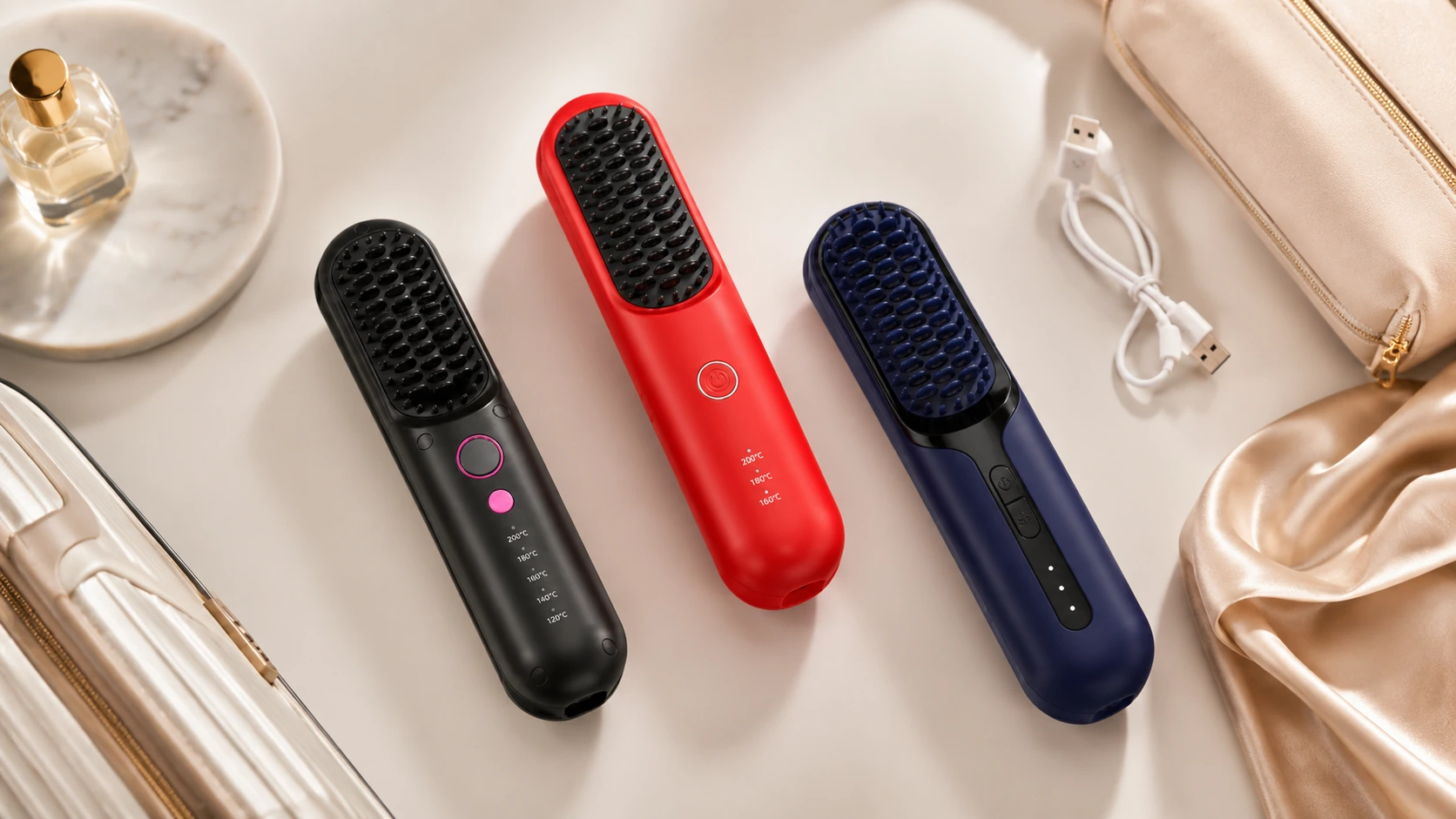
A more compact model can reduce fatigue, particularly for travel and touch-up use. This is one reason why compact rechargeable brushes attract interest. For buyers considering a lightweight travel hair straightening brush, sample testing should include at least one full styling session, not just a quick bench test.
Will the Cord Get in the Way? What About Cordless Styling?
Cord management is another real-life issue. Customers may ask whether the cord tangles, whether it twists during use or whether the tool is better in a cordless format. A corded brush may provide continuous power, while a cordless or rechargeable brush can feel freer and more convenient for touch-ups or travel routines.
This is where interest in a cordless hair straightener brush for travel is growing. For compact rechargeable models, buyers often value:
- greater freedom of movement;
- less cable interference while brushing;
- easier storage in travel kits or handbags;
- a more lifestyle-oriented retail position.
The trade-off is that buyers should check charging time, battery duration and performance stability instead of assuming that cordless automatically means better for every customer.
Is It Convenient for Travel?
Travel convenience is a major part of the buying decision. Customers often want to know whether the tool is compact enough for a suitcase, whether it needs a bulky cable, and whether it works well for quick styling before work, meetings or trips.
Travel-related search behavior also overlaps with sourcing terms such as travel hair straightening brush wholesale and portable rechargeable hair straightener brush. If the target market includes travel retail, gifting or on-the-go beauty use, the product story should cover size, storage, locking design and charging format.
For airline or carry-on use, sellers should avoid blanket statements and instead advise buyers and users to confirm battery and travel rules for the exact destination or airline. That keeps product communication more accurate.
Does It Support Global Voltage?
Does it support global voltage is especially important for international buyers. The safest answer is: not every model does, and voltage support must be checked per model. This is true for both corded and rechargeable tools.
| Voltage / Power Topic | What Sellers Should Clarify |
|---|---|
| Dual voltage | Confirm whether the exact model supports it instead of assuming all hair tools in the range are suitable worldwide. |
| Charging method | For rechargeable products, check cable type, charging input and any region-specific accessory requirements. |
| Plug discussion | For corded projects, verify plug type and destination market requirements before production. |
| Retail claim | Avoid broad “works everywhere” claims without technical confirmation. |
This is especially relevant for brands sourcing a dual voltage hair straightening brush or preparing global product listings. Clear documentation matters more than generic promises.
Why Users Often Prefer a Straightening Brush
There are many reasons customers recognize the category positively. One of the biggest is convenience. A straightening brush generally asks for less technique than a blow dryer plus round brush, and it often creates a softer, more natural finish than a flat iron. For many people, that is exactly the result they want.
- Compared with a blow dryer and round brush: usually easier to learn and easier to manage alone.
- Compared with a flat iron: often faster for quick daily smoothing and less severe-looking in the final finish.
- Compared with doing nothing: gives better control over puffiness, flyaways and frizz in a short routine.
That combination of speed, simplicity and natural-looking polish is why many users consider the tool category very practical for everyday styling.
What Buyers Should Test Before Choosing a Model
For distributors, beauty brands and sourcing teams evaluating a private label hair straightening brush or an OEM hair straightening brush supplier, user experience should be tested as carefully as technical specifications.
| Evaluation Point | What to Observe |
|---|---|
| Heat-up speed | Actual time to reach the commonly used styling temperature. |
| Full-head styling time | How long the routine takes on fine, medium and thick hair. |
| Ease of use | Whether first-time users understand the controls and brushing motion quickly. |
| Detangling comfort | Whether the brush glides or tends to pull on the target hair types. |
| Safety feeling | Perceived comfort around the scalp, ears and hands. |
| Weight and fatigue | Comfort after several minutes of continuous use. |
| Cord or charging convenience | Whether the tool feels practical in daily life and travel scenarios. |
| Travel and voltage claims | Whether the actual specifications support the intended market messaging. |
Testing should involve more than one hair type and more than one user. A tool can perform well in a controlled demo but feel very different during a normal morning routine.
Conclusion
Hair straightening brushes are usually considered easy to use, and that ease is one of the category’s strongest selling points. Many users find them simpler than a blow dryer plus round brush and more natural-looking than a flat iron. Still, the real experience depends on several practical details: heat-up speed, total styling time, comfort, detangling, safety, weight, cord behavior, portability and voltage suitability.
For sellers and private label buyers, this means the best content is not just “high temperature” or “ceramic technology.” It is clear, realistic guidance that answers how the product actually feels in daily use.
Looking for an Easy-to-Use Travel-Friendly Straightening Brush?
Aveloria Hair supports beauty brands, distributors and retailers with model selection, private label packaging and sample evaluation. If you are comparing slim, easy-to-handle ionic models, the S145 Slim Ionic Hair Straightener Brush is one model worth reviewing for everyday styling, frizz-control positioning and international market projects.
Frequently Asked Questions
Are hair straightening brushes easy to use?
Most users find them easier to use than a blow dryer plus round brush because the brushing motion feels more natural and the routine is simpler. The exact experience still depends on hair type, sectioning and product design.
How fast does a hair straightening brush heat up?
Many modern brushes warm up quickly, but the exact speed depends on the heating system, power design and battery or plug configuration. Buyers should test actual sample units instead of relying only on marketing claims.
Will a straightening brush pull or snag hair?
It can if the hair is not detangled first, if sections are too large, or if the product is not well matched to the hair type. A good brush should glide more comfortably and support smoother styling motion.
Will it burn the scalp, ears or hands?
Anti-scald structure can improve safety, but users should still follow instructions and style carefully around sensitive areas. No heated styling tool should be treated casually just because it has a protective design.
Do all straightening brushes support global voltage and travel use?
No. Some are compact and rechargeable, but global voltage, charging input, battery rules and plug requirements should always be checked for the exact model and target market.
Continue your sourcing review
Use these related pages to compare models, assess samples and prepare a more complete supplier inquiry.
A usable sample checklist for a private label straightener brush
When sourcing from a China hair straightener brush manufacturer, translate “easy to use” into observable sample checks: grip and perceived weight, brush-tip comfort, button placement, accidental setting changes, cord reach or charging procedure, cool-down handling, manual clarity and retail-box instructions. Record who completed each review and any changes made before a pre-production sample is approved.
Compare the S102 corded ionic brush with the S211 rechargeable ionic brush if your range spans home and travel positioning. Do not assume rechargeable models have the same voltage, charging, runtime or travel permissions as corded versions; check each SKU's documented configuration. Use the sample evaluation checklist and model-specific document guide before confirming packaging claims.
Request model recommendations, sample scope and MOQ from 1,000 pcs per model.
2026 Keyword & Buyer Intent Update
What should beauty brands evaluate when choosing an easy-to-use hair straightener brush?
Beauty brands should evaluate more than the claim “easy to use.” Compare brush geometry, weight, grip, heat-up behavior, temperature controls, anti-scald contact surfaces, cord management or battery format, and how the sample performs on the intended hair types. A hair straightener brush manufacturer for beauty brands should help buyers review these points on the exact model before packaging and positioning are finalized.
For an OEM or private label project, ease of use becomes a product-selection criterion rather than a marketing phrase. An anti-scald hair straightener brush manufacturer should be able to show the physical protection concept on the chosen model, while adjustable temperature straightening brush OEM options should be checked for control logic, temperature steps and user-interface clarity during sample evaluation.
Primary search intent: hair straightener brush manufacturer for beauty brands. Related buyer searches: anti-scald hair straightener brush manufacturer, adjustable temperature straightening brush OEM, smart temperature control straightening brush, automatic shut off straightening brush OEM, heat protection hair straightener brush supplier.
Buyer FAQ
Is anti-scald design enough to make a straightener brush easy to use?
No. Anti-scald design is one usability factor. Buyers should also review grip, brush spacing, weight, controls, cord or battery format and how smoothly the sample moves through the intended hair types.
Should a beauty brand request adjustable temperature controls?
It depends on the target customer and product platform. If adjustable temperature is important to the brand proposition, confirm the available settings and test them on the exact sample rather than relying on a generic specification.